
Onsen and Girls
Fantasy FutureCard
3.072.00 Reviews
- Version
- 1.0.7
- Installs
- 100.00K
- Age Rating
- Mature 17+
Screenshots

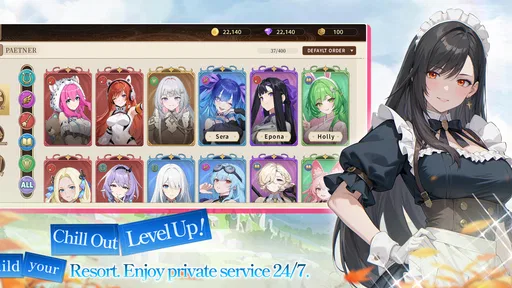
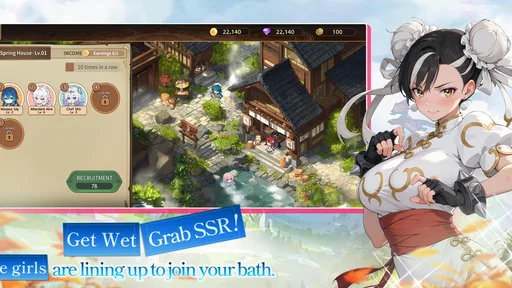



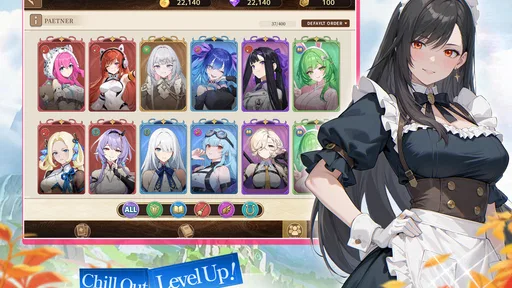

Our Review of Onsen and Girls
 Analysis by Appyee
I spent time with Onsen and Girls as a mobile card game with an idle RPG structure, and my first impression was that it aims for a very specific kind of relaxed, character-focused play. The setting combines an onsen theme with collectible heroes, relationship-building, repeated pulls, and gradual progression. That mix will appeal to players who enjoy checking in, improving a roster, and watching numbers rise without needing to fight through every encounter manually.
It is free to play, developed by Fantasy Future, and listed for a mature audience of 17 and over. The game had a 3.0 average from around 400 ratings when I reviewed its store presence, alongside over 100K installs. Those figures suggest a modest but established audience rather than a huge mainstream hit. The current version is 1.0.7, and it runs on Android 6.0 or later.
How the interface feels to read and navigate
The most important thing to understand about this game is that it is built around short visits rather than long, uninterrupted sessions. The idle RPG format naturally encourages a routine: collect accumulated rewards, improve characters, use available summons, and check whether the next upgrade is affordable. I found that structure easier to approach than a card game that expects constant attention, although the number of systems can still make the first sessions feel busy.
The card-game identity is tied closely to the hero roster. Instead of treating cards as isolated hands that disappear after each match, the game uses them as part of a longer progression loop. That makes the main navigation less about learning a single ruleset and more about moving between heroes, upgrades, summons, and rewards. For a player who already understands idle RPG conventions, this is relatively approachable. Someone coming from traditional card games may need time to work out which screens matter most.
I recommend taking a slow first pass through every menu rather than spending resources immediately. In games built around frequent rewards, it is easy to tap through several screens quickly and then wonder where a currency came from or why a character improved. A useful personal routine is to collect idle earnings first, inspect the roster second, and only then decide whether to summon or upgrade. That order makes it easier to see what the previous action actually changed.
The clearest way to reduce interface confusion is to treat the game as a daily checklist, not as a race. I would begin with the free rewards and available progression tasks, then stop once the next meaningful decision requires a resource I do not understand. This is particularly useful for players who find dense menus tiring or who prefer to learn one system at a time.
The store presentation highlights a very large number of pulls and the possibility of obtaining an LR hero, so summoning is clearly one of the main attractions. That can make the game exciting for collectors, but it also means the interface may repeatedly draw attention toward recruitment. Players who are sensitive to bright reward loops or who prefer a quiet, uninterrupted layout should expect the summon-focused design to compete with the slower character-development side of the game.
Readability for different players
Readability here is not only about font size. It is also about how much information appears together: hero names, rarity labels, upgrade controls, currencies, reward notices, and progression prompts. I found the experience more manageable when I focused on one character or one objective instead of trying to understand the entire roster at once.
Players with limited vision may want to test the game on their own device before committing time or money. A store description does not establish whether every text element scales cleanly, whether contrast can be adjusted, or whether the game supports screen-reader navigation. I would not assume those options are present. The practical approach is to check whether the most important labels remain comfortable to read at the phone’s normal brightness and whether touch targets are easy to identify without repeated tapping.
Players with reading difficulties may benefit from creating a simple note with the names of the currencies and the upgrades they are currently saving for. That sounds basic, but it prevents the common idle-game problem of opening several reward panels and losing track of the original goal. The game is easier to enjoy when the player supplies a little structure of their own.
Motor, sensory, and attention demands
On the motor side, the idle format is a genuine advantage. You are not required to perform rapid swipes, precise aiming, or repeated timed inputs in the way an action game might demand. That makes it more suitable for players who prefer slower interactions or who cannot comfortably maintain fast, repetitive movements. The card and roster format also supports a mostly seated, low-pressure style of play.
That does not mean every interaction is effortless. Menus with several small controls can still be difficult for anyone with tremors, reduced dexterity, or hand fatigue. Summoning and upgrading are also actions where an accidental tap may feel costly, especially when several buttons sit close together. I recommend using deliberate taps and pausing after each screen changes. The game rewards patience more than speed, so there is little reason to rush through the interface.
For players with attention-related needs, the idle structure can work in two opposite ways. On one hand, it allows progress during periods when sustained concentration is difficult. You can return, collect rewards, and make one decision without committing to a long battle session. On the other hand, the combination of notifications, currencies, character screens, and summon prompts can encourage constant checking.
My best use case was a short break when I wanted something interactive but did not want a full competitive match. I could open the game, review the available progress, make a small roster decision, and leave. I would not recommend treating it as a background activity during work or study, however, because the reward cycle is designed to invite another look.
Sensory comfort is more difficult to judge universally. Character-collection games often rely on animated presentation, repeated reward moments, and attention-grabbing visual cues. If you are sensitive to motion, flashing effects, layered sound, or suggestive character presentation, the mature rating is important context rather than a minor label. I would start with the phone’s volume low and play in a calm environment so you can decide whether the presentation suits you.
The mature 17+ classification also matters for households. This is not a game I would casually hand to a younger player simply because the basic interaction resembles a harmless card collection. Parents and guardians should make their own decision about the theme and presentation before allowing access. The onsen setting and focus on girls are central to the product’s identity, so the audience fit is narrower than the word “card” alone might suggest.
Why the idle structure changes the accessibility equation
Compared with a traditional card battler, this game asks less of the player moment to moment but more of the player’s willingness to manage a long progression loop. That trade-off is worth spelling out. If you need a game that can be paused mentally and physically, the idle format helps. If you need a game with a small number of clearly separated choices, the roster-and-summon structure may feel demanding.
Compared with a purely automatic collector, the card framing gives your decisions more meaning because you are building a group rather than simply watching a timer. The downside is that the player must understand which heroes deserve attention and when to stop spending resources. I would choose this over a reflex-heavy card game when comfort and short sessions matter more than direct tactical control. I would choose a simpler offline card game when I want immediate rules, minimal menus, and no pressure from a collection loop.
Access in everyday situations
The game is best suited to predictable moments: a commute with a stable connection, a quiet break, or a short evening check-in. Its idle design means you do not need to reserve a full hour, which is useful for people whose schedules change throughout the day. I can imagine it working well for someone who enjoys a small routine: open the app, collect what has accumulated, improve one hero, and close it again.
It is less suitable when your attention may be interrupted every few seconds. The game’s value comes from making choices about progression, so opening it while walking, caring for a child, or handling another task is a poor idea. Even if the battles or rewards advance automatically, the menus still require concentration. For safety and comfort, I would use it only when you can keep your phone still and give the screen your full attention.
Travel is another situation where expectations matter. The game requires Android 6.0 or newer, which covers a wide range of devices, but operating-system compatibility alone does not tell me how comfortable it will be on every older phone. Screen size, performance, battery condition, and the way the interface scales can change the experience. Owners of compact displays should pay particular attention to whether text and controls remain easy to distinguish.
The free entry point is helpful for testing that fit. You can see whether the mature presentation, reading load, and summon loop suit you before deciding whether the game belongs in your regular rotation. In-app purchases range from $0.99 to $99.99 per item, so the financial side deserves deliberate boundaries. I would decide on a personal spending limit before engaging deeply with pulls, rather than allowing the excitement of a rare hero to determine the budget.
That is especially important for players who find random-reward systems difficult to resist. The promise of repeated pulls and a high-rarity LR hero can make the collection loop feel urgent, even though an idle game is fundamentally built around waiting and gradual improvement. My advice is to treat paid pulls as optional entertainment, not as the normal price of progress. If you dislike that kind of decision pressure, a premium card game with a fixed purchase may be a better fit.
Who will find it comfortable enough to keep playing?
I think the strongest audience is a player who enjoys character collecting, can tolerate a busy progression interface, and prefers low-intensity sessions. Fans of idle RPGs will recognize the rhythm quickly. Collectors who like building emotional attachment to heroes may also appreciate the bonding angle, since the game is not presented as a purely mechanical deck builder.
It may also work for players who have limited energy for fast games. The ability to return for accumulated progress reduces the need for constant manual action. That is a meaningful strength, not just a convenience. A player recovering from fatigue, using a phone one-handed, or looking for something gentler than a real-time battle game may find the pace more accommodating.
I would be more cautious about recommending it to someone who wants transparent strategy above all else. The emphasis on pulls, hero rarity, and idle growth can make the experience feel more like roster management than a carefully balanced card duel. Likewise, players seeking a family-friendly game, a quiet visual style, or a completely predictable progression path should look elsewhere.
Barriers that still affect the experience
The average rating of 3.0 indicates that the game has not produced a uniformly positive response among its roughly 400 raters. I do not read that number as a final verdict, but it does tell me to approach the experience with measured expectations. The audience is large enough to show real interest, with over 100K installs, yet the rating suggests that the theme, progression model, or overall polish will not suit everyone.
The biggest practical barrier is the relationship between accessibility and monetization. A game can be physically easy to operate while still being mentally or financially demanding. Here, the free-to-play structure, repeated pulls, and expensive upper purchase range may create pressure for players who want to collect everything. The game is easier to recommend when you are comfortable leaving some heroes uncollected and allowing progress to happen slowly.
Another barrier is thematic fit. The mature rating is not incidental, and the onsen-and-girls presentation will be welcome to some players but uncomfortable or inappropriate for others. Accessibility is partly about whether a person can use a product, but it is also about whether the product respects their context. I would not choose this for a shared family tablet, a public workplace, or a setting where suggestive character themes could cause discomfort.
There is also a learning barrier for people unfamiliar with idle RPG language. The game’s appeal depends on understanding the difference between immediate rewards, long-term upgrades, hero quality, and summon decisions. New players can avoid some frustration by delaying purchases until they have seen how the roster develops. Spend the first sessions learning what the game considers valuable; do not assume the most visually prominent button is the most useful one.
Finally, the game may not provide enough control for players who need highly configurable presentation. I would not count on built-in text enlargement, color adjustments, reduced-motion settings, or comprehensive alternative input support unless you test those options directly. Device-level settings may help in some cases, but they cannot guarantee that every screen will remain comfortable. That uncertainty makes a trial period especially important for players with specific accessibility requirements.
My inclusive verdict
Onsen and Girls is a specialized free card-based idle RPG rather than a universal recommendation. I enjoyed the idea of turning short check-ins into steady roster growth, and I can see why the combination of bonding, girls, and high-volume summoning would attract collectors. The game’s low-action structure is its clearest accessibility strength: it avoids reflex demands and supports play in small portions.
At the same time, the same design introduces real friction. Menus, reward loops, mature presentation, and in-app purchases create barriers that matter as much as the relaxed pace. The game is most comfortable for someone who can read a busy interface, make deliberate taps, set spending limits, and accept that collecting every desirable hero may not be realistic.
If that describes you, I would try the free version on your own phone and use the first sessions to judge three things: whether the text is comfortable, whether the summon prompts feel manageable, and whether the theme fits the places where you plan to play. Those checks are more useful than relying on the genre label alone.
My final view is cautiously positive for the right audience. I would recommend it to an adult idle-RPG fan who wants a character-focused collection game and does not need constant tactical control. I would skip it in favor of a simpler card game for younger players, anyone sensitive to monetized random rewards, or anyone who needs strong, clearly documented accessibility customization. Fantasy Future has made a game with a distinct identity, but that identity is also what limits its reach.
Verdict
Strengths of Onsen and Girls
- Relaxing hot-spring setting with a charming Japanese atmosphere.
- Simple controls make the game easy to pick up and play.
- Lighthearted character interactions add personality to the experience.
- Short play sessions suit casual gaming on mobile devices.
- Colorful artwork gives the game a pleasant visual style.
Limitations of Onsen and Girls
- Progress may feel repetitive after extended play sessions.
- Some content can be locked behind in-app purchases.
- The story may feel shallow for players seeking more depth.
- Limited challenge may disappoint experienced mobile gamers.
- An internet connection may be required for certain features.
Similar Picks in This Category
View All
Solitaire - Classic Card Games
MobilityWare4.6

UNO!™
Mattel163 Limited4.3

Spider Solitaire: Card Games
MobilityWare4.6

Solitaire.com - Classic Cards
Tripledot Studios Limited4.7

Plants vs. Zombies™ Heroes
ELECTRONIC ARTS4.1

Hearthstone
Blizzard Entertainment, Inc.4.1
Frequently Asked Questions
What is Onsen and Girls?
Onsen and Girls is a casual, character-focused mobile game built around relaxing hot-spring scenes, conversations, and light interactive elements. The experience mainly emphasizes its cast, visual presentation, and laid-back atmosphere rather than fast-paced action. Before downloading, players should check the current store description because available story chapters, supported devices, language options, and gameplay features may vary between Android and iOS versions.
Is Onsen and Girls free to download and play?
The game may be available as a free download, but players should review the store listing carefully for optional purchases, advertising, energy systems, or content that requires payment. Free access does not always mean that every character, chapter, item, or feature is immediately available. Pricing and purchase conditions can also change, so checking the in-app purchase section before installing is recommended.
Does Onsen and Girls require an internet connection?
An internet connection may be needed for the initial download, account checks, advertisements, updates, cloud functions, or accessing certain content. Some parts of the game could work offline after installation, but this should not be assumed. If you plan to play while traveling or with limited data, test the application after installation and confirm whether its main features remain available without Wi-Fi or mobile internet.
Is Onsen and Girls suitable for children?
Parents should check the official age rating and content descriptors before allowing children to use Onsen and Girls. Because the game is set around an onsen and may include character-focused artwork, conversations, or suggestive themes, its presentation may not be appropriate for every age group. It is also important to review advertising, chat features, external links, and in-app purchases before approving access.
What devices are compatible with Onsen and Girls?
Compatibility depends on the version distributed through the Google Play Store or Apple App Store. Before downloading, verify the required Android or iOS version, available storage, and whether your device meets the developer’s recommendations. Older phones may install the game but experience slower loading, reduced visual quality, crashes, or battery drain. Keeping the operating system updated can also improve stability.
Play our best games!


